
By Kate Cohen
In Consultation with Dr. Ronald Ryan, MD CPE
November 4, 2026
Medical mishaps and illnesses are just a part of everyday life.
Getting the right care in a timely manner can be critical to the healing process.
But have you ever found yourself wondering whether you should seek emergency care or wait to see your primary care provider (PCP)? How do you know which is the better choice for your unique situation and needs?

When it comes to choosing emergency care vs. primary care, there are a few key factors to consider, including urgency, cost, convenience, and health outcomes.
So, what’s the difference between primary care and emergency room (ER) care, and when should you choose one over the other?
Let’s dig a little deeper.
Key Takeaways
- What Primary Care is Designed For
- What Emergency Room Care is Designed For
- The 24 – 48 Hour Rule: A Simple Decision Framework
- When You Should Choose Primary Care
- When You Should Go to The Emergency Room
- Cost Differences Patients Should Know
- Rosen Medical Center Supports Both Paths
- Making the Right Choice for Your Health
What Primary Care is Designed For

Primary care is designed for long-term, continuous healthcare.
Your PCP can help you with preventative care, including annual physicals, screenings, and routine vaccinations.
They can also help you manage chronic conditions like diabetes, high blood pressure, and asthma.
Medications are often managed by PCPs, too.
Ongoing primary medical care is important because providers know your history, labs, and risk factors, and can take your unique background into consideration when helping to make decisions about your health.
Some primary care clinics, including Rosen Medical Center, also offer onsite testing including x-rays and lab work. This makes more in-depth diagnostics and treatment even more convenient for patients.
What Emergency Room Care is Designed For

Emergency room care is designed for life-threatening and severe health conditions. Emergency rooms can be attached to hospitals or freestanding facilities.
They are staffed by doctors and nurses who are trained to handle complex emergency situations.
Patients in emergency rooms are treated according to how serious their condition is, not necessarily on a first-come-first-served basis.
Upon arriving at an emergency room, a nurse will perform an initial assessment to decide how quickly a patient needs to be seen. This process is known as triage.
If needed, emergency rooms can perform emergency surgeries or admit patients to a hospital for ongoing care.
Emergency rooms can also treat children, though there are pediatric-specific emergency rooms that exclusively care for young people.
However, in a true emergency, it is better to get your child care quickly rather than finding a specific pediatric emergency room.
The 24 – 48 Hour Rule: A Simple Decision Framework

The first thing you should ask yourself when deciding whether to go to the emergency room or wait for your primary care provider is: Can this safely wait 24 to 48 hours?
If the answer is yes, make an appointment with your PCP. If the answer is no, consider heading to an emergency room.
This simple question can help you avoid unnecessary ER visits, which can often come with higher copays or out-of-pocket costs.
Need help determining whether you should wait to see your PCP or head to an ER? Rosen Medical Center patients can reach out to APEX Health for after-hours medical questions and concerns. Calls are free, making APEX an incredible resource for RMC patients.
An APEX Health specialist will assess your symptoms and offer guidance on how and where you should seek treatment.
When You Should Choose Primary Care

Primary care offices will often have same-day or next-day sick appointments for patients with illnesses or issues that need attention – even some that may be considered urgent.
Mild cold and flu symptoms, sore throat, and sinus issues can all be assessed and cared for by a PCP. They can also treat pink eye, UTIs, ear infections, and strep throat.
Symptoms accompanied by pain and discomfort certainly need timely treatment. No one wants to have their life disrupted by sickness or injury.
Primary care clinics like Rosen Medical Center are well equipped to diagnose and treat a variety of ailments quickly and efficiently to help patients heal and feel their best as soon as possible.
Recurrent or chronic symptoms are also better saved for your PCP, as most of these issues wouldn’t need urgent attention.
Questions about medications or refill requests are also often not emergencies, meaning you can skip the ER and reserve those conversations for your PCP.
When You Should Go to the Emergency Room

There are some situations that require a trip to the emergency room rather than to your primary care clinic.
Head straight to the ER if you are experiencing any of the following symptoms:
- Chest pain
- Stroke symptoms
- Severe bleeding
- Loss of consciousness
- Difficulty breathing
An emergency room will be best equipped and staffed to handle medical emergencies and are open 24/7, 365 days a year.
Cost Differences Patients Should Know

Where you choose to seek treatment can also affect the cost you pay out of pocket.
Typically, an appointment with your PCP will cost the least, with a lower copay that makes ongoing care affordable and ideal.
Emergency rooms can have high costs, which is often another reason to reserve ER visits for emergencies only.
Remember, if you have life-threatening symptoms, cost should not affect your decision to seek emergency treatment.
Rosen Medical Center Supports Both Paths
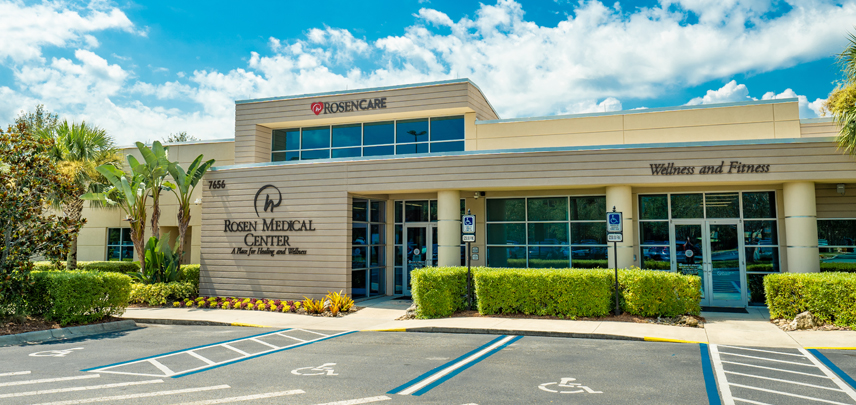
Rosen Medical Center (RMC) is a primary care clinic with knowledgeable and passionate staff dedicated to the wellness of Rosen associates and their families.
RMC providers are dedicated to the health and well-being of their patients, offering preventative care and chronic condition management, among other medical services.
Same-day or next-day sick visits are typically available for patients feeling unwell. If additional care is recommended, your PCP can refer you to a wide variety of specialists within the award-winning Orlando Health network.
RMC offers in-house lab services, x-rays, and the ability to perform minor surgical procedures, so patients receive even more comprehensive care from the comfort of their primary care clinic.
If an RMC patient decides to seek treatment at an emergency room, their PCP will follow up shortly after checking in to discuss any ongoing treatment recommendations.
As a patient at Rosen Medical Center, your health is always our priority.
Making the Right Choice for Your Health
Choosing between a visit to your PCP or an ER can seem complicated, especially in a situation where you may not be feeling your best. Knowing your options and being able to assess the urgency of your symptoms is a great place to start.
To schedule an appointment with your RMC PCP, call our office at (407) 996-4554.
Or if you find yourself needing counsel after-hours, call APEX Health at (855) 245-8395 for no cost.
We are here and ready to help you feel your best.
